
7 Signs Your Employees Aren’t Engaging with Matching Gifts
In today’s workplace, employee engagement is a vital component of a thriving corporate culture, and one of the best ways to encourage engagement is through corporate social responsibility (CSR) programs. Matching gift programs, in which companies match their employees’ charitable donations, are an excellent way to foster engagement while giving back to the community. However, if your employees aren’t actively participating, you may not be reaping the full benefits of the program.
So, how do you know if employees are fully involved with matching gifts? In this article, we’ll cover 7 signs your employees aren’t engaging with matching gifts and offer tips to encourage greater participation. These include:
- Low Participation Rates
- Lack of Program Awareness
- No Communication or Promotion
- Limited Use of Matching Gift Tools
- Minimal Donations or Unused Matching Opportunities
- Negative Employee Feedback
- Lack of Impact
Matching gift programs are one of the most powerful ways for companies to support employee-driven charitable giving while boosting workplace morale. These initiatives not only amplify the impact of employees’ contributions but also showcase your company’s commitment to social responsibility.
Understanding the signs that employees are not engaging with matching gifts is the first step in turning things around and ensuring that your program becomes a more effective and integral part of your company’s culture. Let’s begin!
1. Low Participation Rates
One of the most apparent signs that employees aren’t engaging with matching gifts is a low participation rate. If only a small percentage of your workforce is taking advantage of the program, it could indicate that employees don’t fully understand it, don’t see its value, or otherwise face barriers to participating.
To assess this concern, compare participation rates to industry benchmarks or your own historical data.
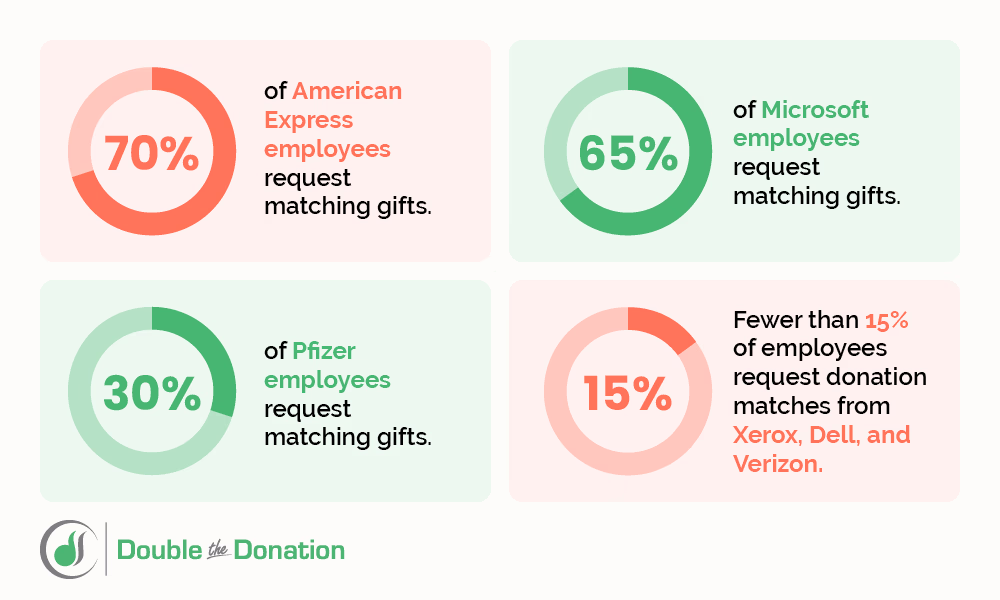
If there’s been a noticeable drop or if the numbers are consistently low, it may be time to evaluate your internal marketing and communications efforts. A lack of participation might indicate that employees are unaware of the program or need more substantial incentives to participate.
2. Lack of Program Awareness
A common reason why employees aren’t engaging with matching gifts is that they don’t know the program exists. If your employees aren’t aware of the matching gift program, they can’t participate. Many companies find that, despite offering matching gifts, employees don’t take advantage of them because they don’t know they exist.
In other words, it’s essential to assess how you’re promoting your matching gift program. If the communication has been sporadic or hidden deep within company resources, then awareness is likely to be low.
In fact, Double the Donation states that “Only 19% of companies include more than one paragraph regarding matching gift programs in their easily accessible employee handbook materials or websites.”
Therefore, regularly remind employees about the program through email newsletters, internal communications, meetings, and even social media channels. You can also create a dedicated page on your company’s intranet or internal portal where employees can easily find information about eligibility, the types of charities they can donate to, and how they can submit their matching requests.
3. No Communication or Promotion
Even if your matching gift program exists, it may not be effective if you aren’t actively promoting it. A lack of communication about the program can lead to a significant gap in engagement. For instance, if the program is mentioned only once a year or buried in a long email or internal memo, employees may overlook it.
To drive engagement, ensure the program is consistently promoted. In addition to general program announcements, regularly update employees with success stories of colleagues who have used the program. Show how the company’s matching gifts have supported essential causes. You can also highlight the overall impact of the matching gift program and regularly remind donors of upcoming donation deadlines.
Make sure to utilize all available communication channels (email, social media, company-wide meetings, and intranet pages) to keep the program top of mind for employees.
4. Limited Use of Matching Gift Tools
In today’s digital age, there are plenty of tools available to streamline and improve the matching gift process for employees. If your program or your employees aren’t utilizing these tools, it could be a sign that the process is too complex, unclear, or not integrated into their everyday workflows.
Corporate-facing matching gift software such as YourCause, CyberGrants, America’s Charities, and others can simplify the process of submitting matching gift requests and tracking donations. Meanwhile, CLMA-certified platforms like Uncommon Giving, Millie, and Selflessly even enable automated matching gift request processes that make it quick and easy for employees to complete their matches directly on their favorite charities’ websites.
If your employees aren’t using the tools provided, they might not be fully aware of how easy it can be to request a match. Review your company’s request process using your selected software and ensure the experience is user-friendly and well-integrated with your broader systems.
At the same time, it’s a good idea to provide training or walkthroughs for these tools to help employees navigate them easily. You might even consider setting up a help desk or dedicated contact point for employees with questions about using your matching gift tools.
5. Minimal Donations or Unused Matching Opportunities
A crucial indicator that your employees may not be fully engaging with the matching gift program is the number of unused matching opportunities. Suppose employees make small donations or choose not to take advantage of the full matching amount. In that case, it may indicate that they either don’t understand how the program works or don’t find it valuable enough to participate fully.
The problem could also lie in the program’s structure. Ensure that your matching gift program is easy to understand and that employees know exactly how much they can donate, which organizations qualify, and how much of their donations will be matched. It’s crucial that employees feel encouraged to take full advantage of the program, rather than donating only small amounts out of uncertainty or lack of interest.
For the best results, consider increasing the visibility of matching opportunities and adding reminders at critical times (such as near the end of the year or during corporate giving days). You can also promote special events or matching gift campaigns that encourage employees to donate more and have their contributions matched at a higher ratio.
6. Negative Employee Feedback
If employees are not engaging with matching gifts, one of the easiest ways to identify the root cause is by soliciting feedback. If employees express frustration, confusion, or disinterest in the program, it’s a clear sign that the initiative may need some refinement.
Collecting feedback through surveys, interviews, or focus groups can help you pinpoint the reasons behind low program participation. Some employees may find the matching gift process too complicated, while others may not understand the company’s commitment to supporting charitable causes. Addressing these concerns directly can lead to significant improvements in engagement.
For example, if employees are confused about eligibility, clarify which types of organizations are eligible for matching gifts and provide examples to guide donations. If employees feel the program lacks recognition, consider creating a system to acknowledge those who contribute to charity through the matching gift program.
Whatever feedback you receive, be sure to acknowledge and improve your efforts accordingly.
7. Lack of Impact
A significant sign that employees aren’t fully engaging with matching gifts is the lack of impact these initiatives have. When matching gift campaigns fail to achieve the expected level of participation, it may reflect a broader issue with employee engagement. The lack of strong engagement can lead to missed opportunities in recruitment, retention, and overall company morale.
Why? Companies with high employee engagement, especially in CSR programs, tend to retain talent longer and attract candidates who share similar values. However, if employees perceive that the matching gift program is ineffective or lacks purpose, it could signal a disconnect between the company’s corporate culture and its workforce’s values. This is especially true among younger generations, such as Gen Z, who prioritize social responsibility and community involvement in their career choices.
To address the limited impact of your matching program, it’s crucial to align it with causes that resonate with your employees. Make sure they have freedom of choice when it comes to matching gift recipients, and ensure involvement is as easy as can be. From there, share stories and statistics that highlight the positive outcomes of employee donations and the company’s contributions. This not only boosts morale but also demonstrates the value of the matching gift program in making a difference.
Wrapping Up & Next Steps
If you notice one or more of the signs listed above, it may be time to rethink your company’s approach to engaging employees with matching gifts. Boosting participation requires clear communication, easy-to-use tools, consistent promotion, and an ongoing culture of recognition. To turn things around, start by raising awareness, simplifying the matching process, and ensuring your employees feel valued for their contributions.
By actively addressing barriers to engagement and integrating the matching gift program into your company culture, you can increase participation, amplify the impact of charitable donations, and improve overall employee satisfaction. Good luck!