Build a High-Converting Nonprofit Corporate Sponsorship Page

TLDR: A high-converting nonprofit corporate sponsorship page is a dedicated landing page designed to attract and capture inbound business partnerships. By clearly outlining benefits, showcasing social proof, and providing an easy-to-use contact form, nonprofits can streamline the corporate sponsorships process and reduce friction for busy CSR professionals.

Nonprofits often spend significant time and resources on outbound communications in order to secure business partnerships. While active outreach is vital, many organizations overlook the power of an optimized inbound funnel. As companies increasingly prioritize social responsibility, their managers are vigorously searching for organizations that align with their brand values.

If you don’t have a dedicated nonprofit corporate sponsorship page, you’re likely leaving significant revenue on the table by making it difficult for these partners to find you.

But don’t worry! We’ll cover everything you need to know about building such a resource here. This includes:

By creating a centralized hub for corporate engagement, you provide a professional destination for potential partners to explore. This page serves as a “home base” whether a company finds you through search or an employee reaches out on your behalf.

Did You Know? According to recent corporate sponsorship statistics, 91% of global consumers expect companies to do more than make a profit. They expect businesses to operate responsibly to address social and environmental issues.

Essential Elements of a Nonprofit Corporate Sponsorship Page

A high-converting nonprofit corporate sponsorship page must act as a digital pitch deck. When a CSR manager lands on your site, they should immediately understand who you are, what you do, and, most importantly, how a partnership benefits their specific business objectives.

Clarity is the primary driver of conversion in the B2B (or business-to-nonprofit) space.

The first structural requirement is a clear, compelling value proposition at the top of the page. This is not just your mission statement; it is a statement of collaborative impact. Use this space to define the specific social problems your organization aims to solve and why a corporate partner is the missing piece of the puzzle. For the best results, avoid vague language and focus on results-oriented headers that reflect companies’ commitment to community leadership.
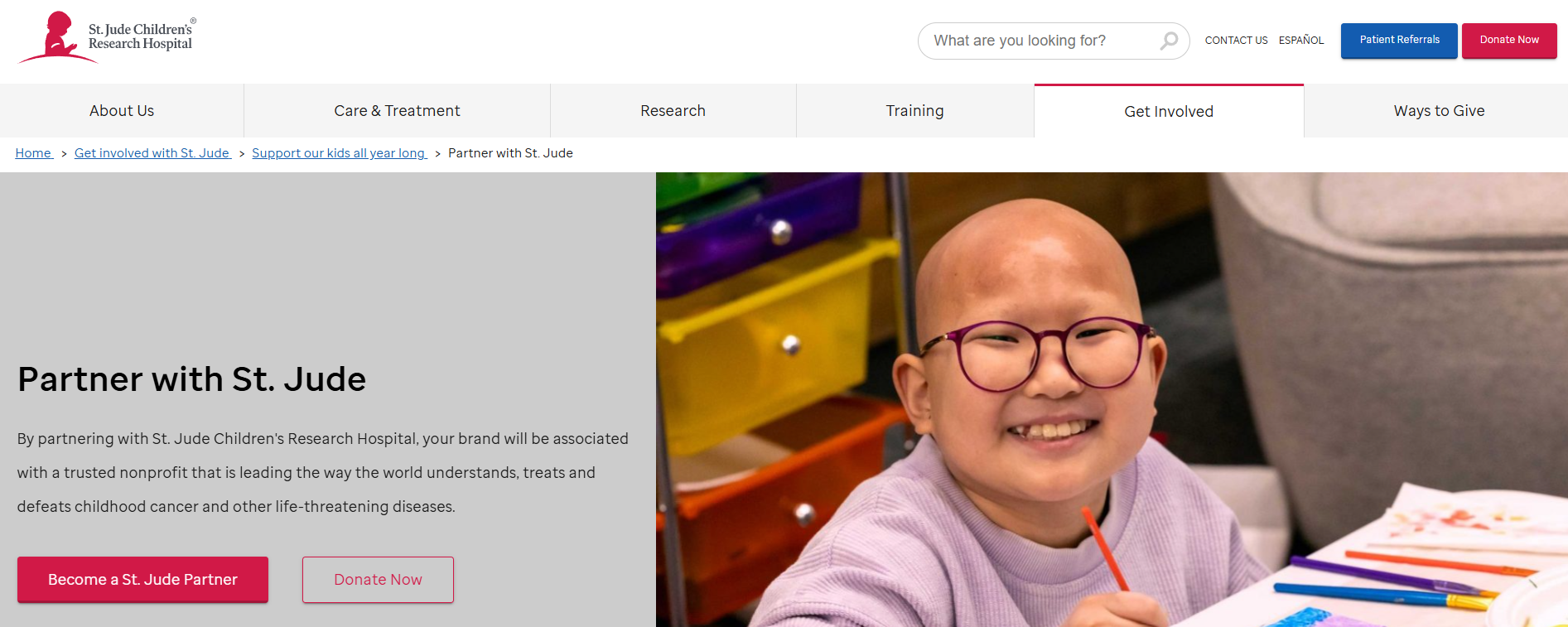
Check out this example from St. Jude Children’s Research Hospital that really puts these ideas into practice below:

How St. Jude built a high-converting nonprofit corporate sponsorship page

Beyond the mission, it’s important that you provide a menu of engagement opportunities. Not every business wants to sponsor a massive gala. Some may prefer payroll giving programs, while others may be more interested in providing matching gifts or volunteer grants. By listing these options clearly, you show that your nonprofit is flexible and understands the diverse ways corporations can give. This variable approach helps a company find its own “right fit” without the back-and-forth of an email chain.
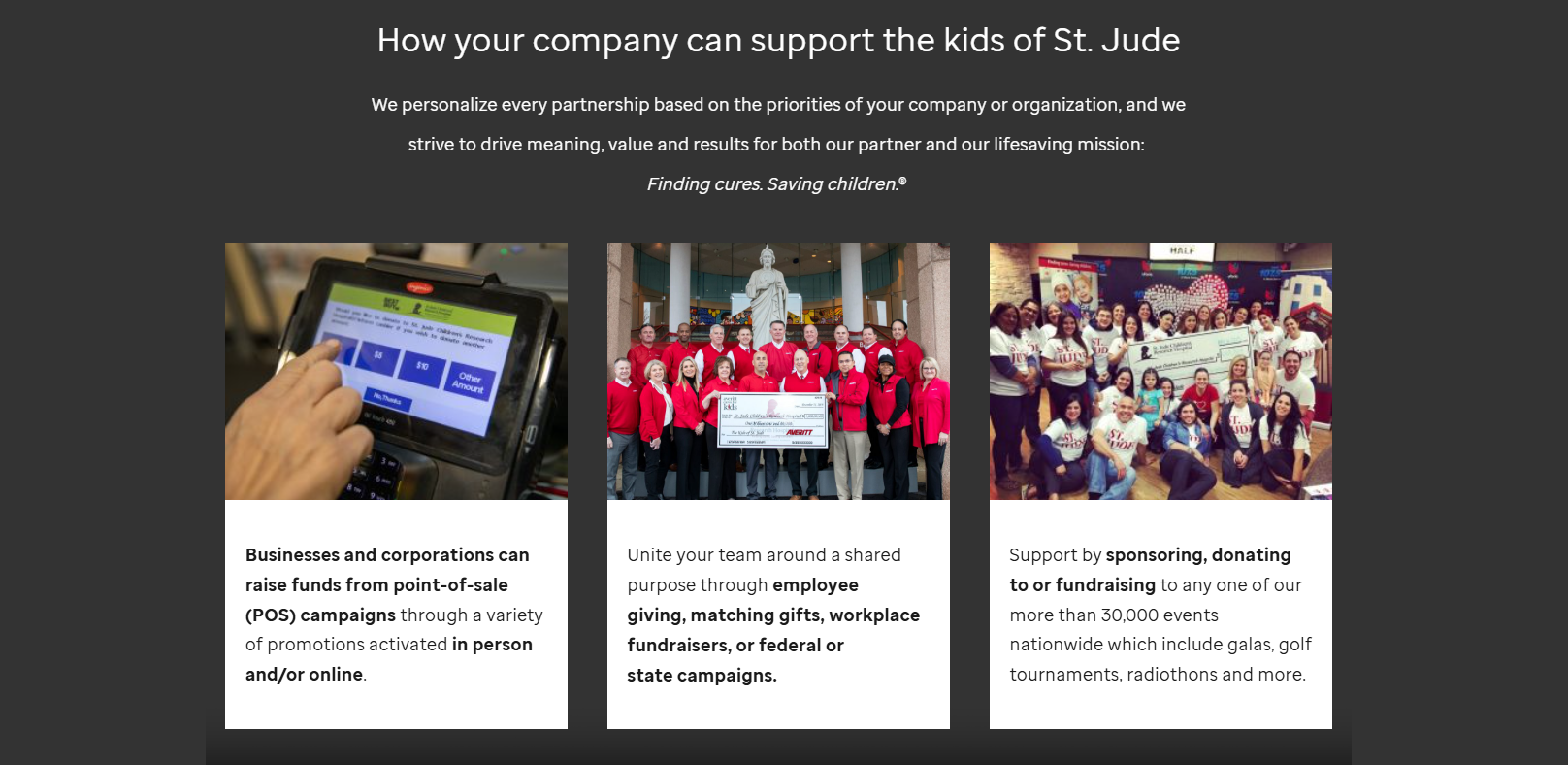
How St. Jude built a high-converting nonprofit corporate sponsorship page

Finally, your page must include a streamlined intake mechanism. A common mistake is providing only a general info@ email address. This creates a hurdle for the partner and a tracking nightmare for your development team. Instead, use an embedded sponsorship inquiry form that asks for the company name, primary contact, and their primary areas of interest. This professionalizes the experience and ensures the right person on your team receives the lead immediately.
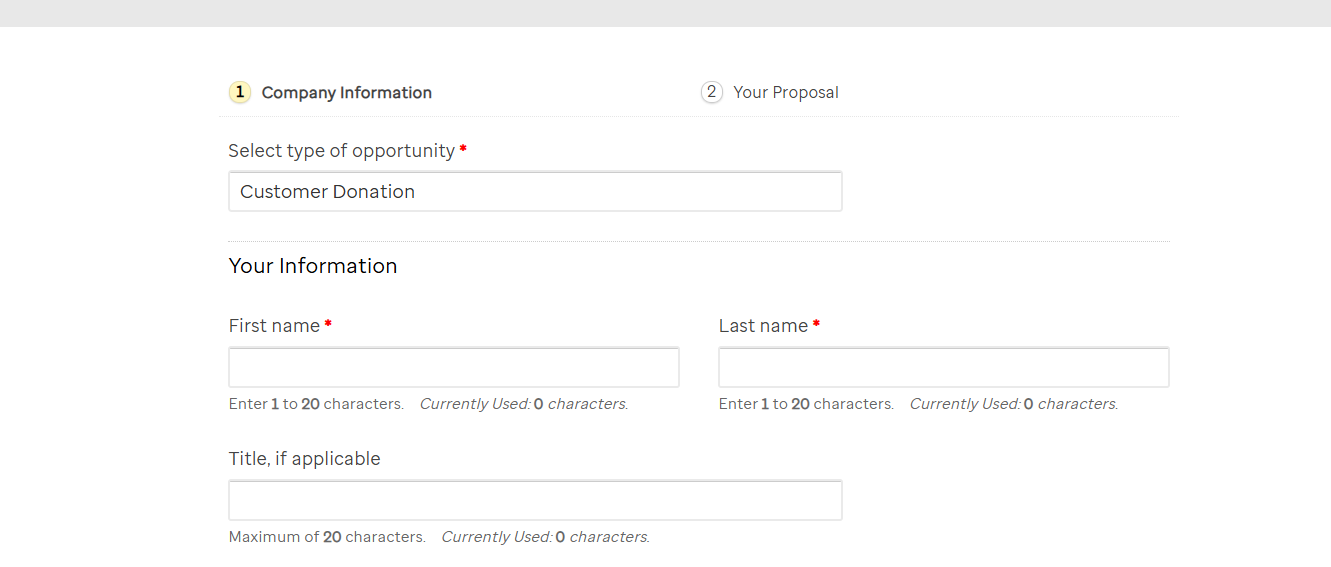
How St. Jude built a high-converting nonprofit corporate sponsorship page

Partnership Disambiguation: What This Page is Not

To ensure your nonprofit corporate sponsorship page converts the right leads, it is important to also clarify what this resource is not. Doing so prevents confusion between different types of support and saves your staff time by filtering out unrelated inquiries.

Specifically, this page should not serve as a catch-all for individual donors seeking a standard donation receipt. Nor should it be the primary portal for individuals searching for a one-time volunteer shift. While volunteer time off is a valid corporate interest, the sponsorship page should focus on the high-level partnership agreement rather than the logistics of a single Saturday afternoon. Confusing these paths can lead to a “noisy” inbox and missed opportunities for major relationships.

By clearly defining the page’s scope, you signal to professional CSR managers that you understand their needs and are prepared for a high-level business discussion.

Demonstrating Partnership Value and Communicating ROI

Corporations are increasingly viewing their social impact through the lens of a “Social Return on Investment.” To convert these visitors, your nonprofit corporate sponsorship page must speak their language. While the heart of the partnership is your mission, the head of the partnership is the brand visibility and improved reputation you provide in return.

Start by outlining the marketing benefits. For example:

  • Will their logo be featured on a high-traffic website?
  • Do you have a significant social media following or an engaged email list?
  • Would you promote their brand at an upcoming well-attended event?

Providing these audience reach metrics allows a marketing director to justify the sponsorship spend. If you can show that your audience aligns with their target customer base, the partnership becomes a strategic marketing asset rather than just a philanthropic line item. How St. Jude built a high-converting nonprofit corporate sponsorship page
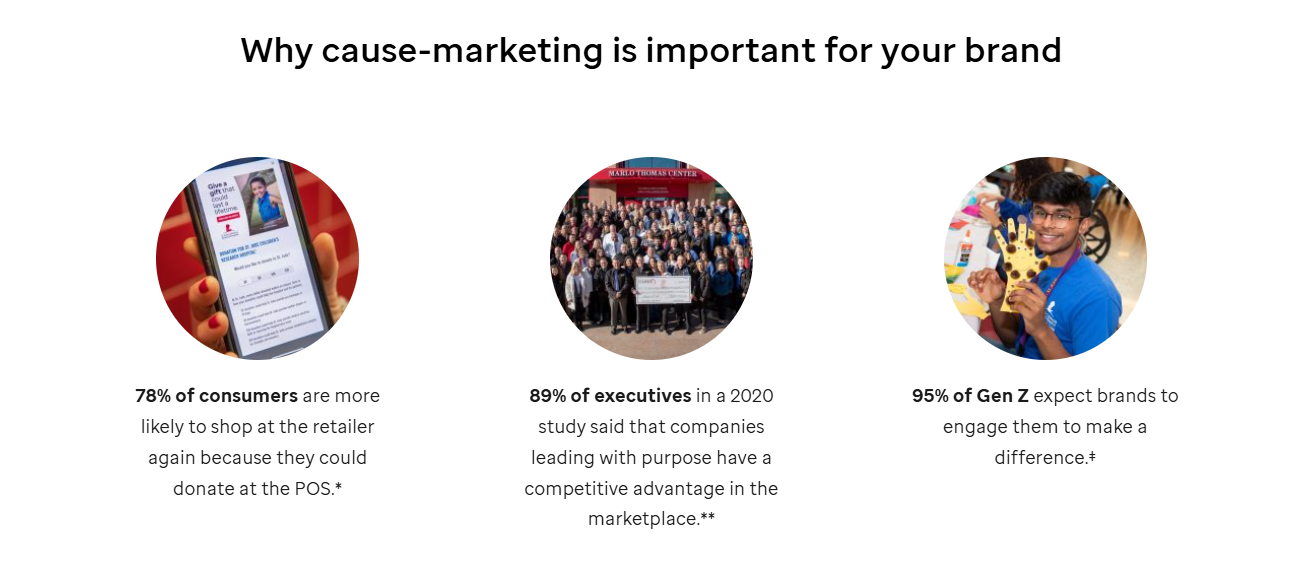
Employee engagement is another critical value driver. Many companies struggle with staff retention and are looking for ways to boost workplace morale. For these reasons, consider highlighting how your nonprofit can facilitate corporate volunteerism or internal giving campaigns to rally individual employees.

Leveraging Social Proof: Converting Interest Into Impact

In the world of corporate giving, no company wants to be the “guinea pig.” Businesses feel safer investing in organizations that have a proven track record of successful partnerships. This is why social proof is the most powerful psychological trigger you can use on your nonprofit corporate sponsorship page. It moves the conversation from “what we could do” to “what we have already achieved.”

Consider featuring a “Logo Cloud” of current or past partners. This provides immediate visual credibility. However, do not stop at the logos alone. High-converting pages use mini-case studies or testimonials from previous corporate contacts. A quote from a local CEO about how a volunteer day transformed their team’s culture is worth more than five paragraphs of your own marketing copy. It provides a third-party validation that your organization is professional and easy to work with.
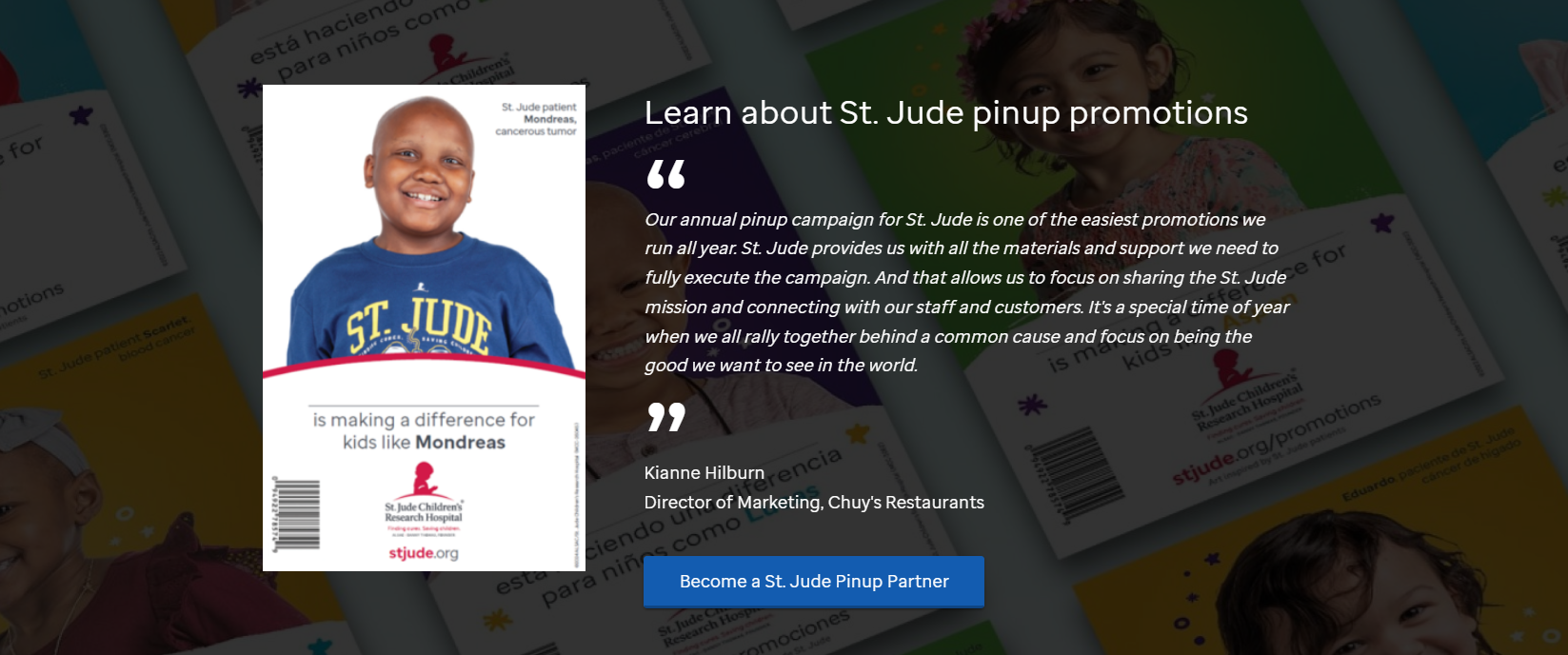
How St. Jude built a high-converting nonprofit corporate sponsorship page

When presenting case studies, focus on the mutual wins. Describe a problem the company faced (e.g., low employee morale), the solution you provided (e.g., a custom skills-based volunteer program), and the tangible result (e.g., a 15% increase in internal engagement scores). This results-oriented storytelling mirrors the reports that CSR managers must give to their boards of directors.

Additionally, communicate the diversity of your partnerships. If you only show big-box retail partners, a small boutique law firm might feel they aren’t a fit. By showcasing a range of partnership sizes, types, and industries, you open the door for businesses of all scales to reach out. This inclusive approach ensures your inbound funnel remains as wide as possible.

Quick Tip: Use “Success Snapshots” or small, digestible boxes containing a stat and a photo from a past corporate event. For example: “Company X helped us serve 5,000 meals while 80% of their staff reported increased pride in their workplace.”

Optimizing the Inbound Corporate Partnership Contact Flow

The ultimate goal of your nonprofit corporate sponsorship page is a conversion, which in this context is a form submission or a partnership inquiry. If your contact flow is clunky, you’ll lose potential partners at the final hurdle. For this reason, you must make it as easy as possible for a busy professional to say “I’m interested.”

Keep your contact form short. At this stage, you don’t need their tax ID or a 500-word essay on their philanthropic goals. You simply need enough information to qualify the lead and route it to the right person on your team. Fields should include name, company, email, and a dropdown menu for “Type of Partnership Interested In” (e.g., Event Sponsorship, Employee Volunteering, Cause Marketing, Corporate Grants, etc.).

After the form is submitted, the experience must remain professional. A generic “Thank you, we will get back to you” message is a missed opportunity. Instead, redirect the user to a “Sponsorship Success Hub” or send an automated email that includes a downloadable sponsorship prospectus. This keeps the momentum going and provides them with immediate value while they wait for your staff to reach out personally. From there, the second touchpoint should be a personal email or phone call from a development officer to discuss the specific needs of that business.
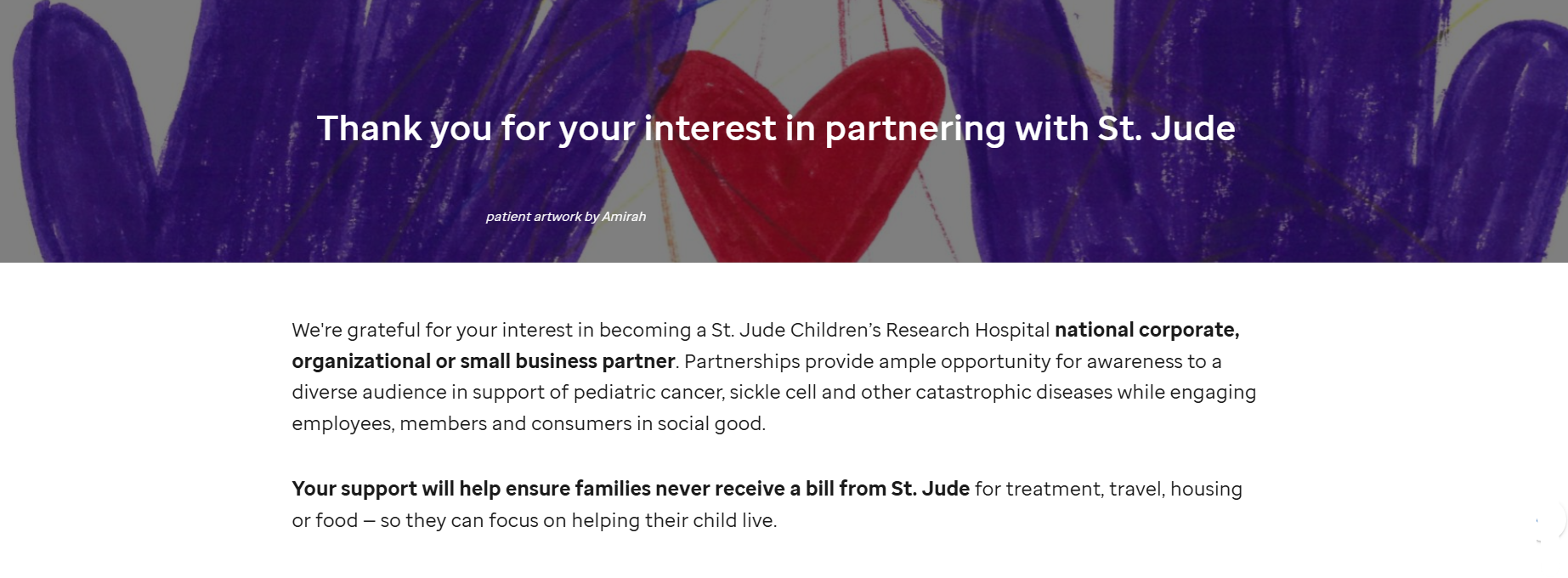
How St. Jude built a high-converting nonprofit corporate sponsorship page

Effective internal routing is just as important. For the best results, ensure that your fundraising software or CRM is integrated with your website form. This allows you to track the source of the lead and ensure that no inquiry falls through the cracks. In the corporate world, a response within 24–48 hours is the standard; anything longer can be perceived as a lack of organizational capacity. Fast, professional follow-up is often the deciding factor in securing a major sponsorship.


Wrapping Up & Next Steps

Building a high-converting nonprofit corporate sponsorship page is an investment in your organization’s future sustainability. By moving from a purely outbound strategy to a balanced approach, you save time, reduce administrative friction, and professionalize your brand in the eyes of the corporate world.

Just remember that this page is a living asset; it should be updated regularly with new case studies, fresh metrics, and current opportunities.

If you are ready to take your corporate giving to the next level, consider these immediate next steps:

  • Audit your current “Partners” or “Ways to Give” page to see if it provides a clear path for business inquiries.
  • Gather at least two testimonials from current corporate partners to add as social proof.
  • Create a simple intake form using your fundraising tool of choice to capture leads directly into your CRM.

Corporate philanthropy is evolving, and companies are seeking nonprofits that can serve as strategic partners. By following the structural and psychological principles outlined in this guide, you can ensure that when a company seeks a cause to support, your organization stands out. Start building your high-converting page today and watch your corporate revenue grow.

Interested in learning more about the current state of corporate giving? Download Double the Donation’s free Nonprofit Corporate Engagement Report to see how your organization is stacking up (and what you can do to increase support).
Brand Authenticity: Why Your Company's Giving Tech is Your Culture

Brand Authenticity: Why Your Company’s Giving Tech is Your Culture

The quality of your company’s giving tech directly reflects your corporate culture. Providing a seamless, intuitive matching gift experience protects your brand authenticity and ensures your commitment to social good is perceived as a core value.

In the modern corporate landscape, a company’s brand is no longer just what it tells the world through marketing campaigns. It is the sum of every interaction an employee has with the organization’s internal systems.

This is particularly true for social impact initiatives. When a corporation claims to be tech-forward and deeply committed to doing good, yet provides a clunky workplace giving system, a significant brand disconnect occurs.

In this guide, we’ll walk you through everything you need to know about:

The lived experience of an employee participating in your corporate social responsibility programs can either erode trust or build pride. To protect your company’s brand, it’s important that you prioritize a smooth user journey that matches the efficiency of the apps your workforce uses every day.

Keep reading to find out how you can do so.

The Rise of Brand Authenticity in the Digital Workplace

Authenticity has become the most valuable currency in the modern workplace. Employees are no longer satisfied with high-level mission statements; they want to see those values reflected in the company’s daily operations. This shift is driven by a workforce that values transparency and consistency. When a company’s actions align with its words, it creates a powerful sense of belonging and purpose.

Corporate giving is one of the most visible expressions of a company’s values. It is a tangible way for an employer to say, “We care about the things you care about.” However, the medium is the message. If the technology used to facilitate that giving is outdated and frustrating, the message of caring is lost.

An authentic brand ensures that every touchpoint, especially those related to social impact, is designed with the user in mind.

In today’s world, brand authenticity is inextricably linked to digital fluency. Employees expect their work tools to be efficient. A company that forces a staff member to jump through hoops to double their impact through its matching gift program is essentially saying that the individual’s time is not worth a modern investment. True authenticity requires a commitment to removing these barriers and making the giving experience as seamless as possible.

Quick Tip: Conduct an internal audit of your CSR programming. If engagement is low, the issue may not be the initiative itself, but friction within the software used. User-friendly tools are the best way to align your “innovation” values with your “giving” goals.

Why Clunky Systems Undermine Corporate Culture

When an employee participates in a matching gift program, they take a proactive step to support a cause. This is a high-intent moment. If they encounter a clunky system that requires multiple logins or manual data entry, that intent can lead to frustration. This frustration does not just stay within the giving portal; it bleeds into the employee’s overall perception of the company.

A portal-locked system creates a siloed experience. It separates the act of giving from the act of being an employee. In a tech-forward culture, systems should work together. When a company’s internal platform is disconnected from the nonprofit’s donation form, it creates an unnecessary administrative burden that employees may interpret as a lack of true support from leadership.

Furthermore, these hurdles lead to low participation rates. When program participation is low, the corporate culture of giving feels weak. This can become a self-fulfilling prophecy where employees stop giving because they don’t see their peers doing so. To break this cycle, corporations need to move toward integrated solutions that facilitate an intuitive giving experience.

Did You Know? High-friction processes are a primary reason why billions in potential impact go unclaimed. According to recent statistics, only 1.31% of contributions are matched at the average nonprofit, despite more than 10% qualifying for corporate matches.

Frictionless Philanthropy and the New Employee Expectation

The expectations of the modern workforce have been shaped by the consumer world. Employees use apps that anticipate their needs and simplify their lives. They expect the same level of sophistication from their employers. Frictionless philanthropy is the idea that giving back should be as easy as any other digital transaction. It’s no longer an optional extra; it’s a requirement for attracting and retaining top talent.

For Gen Z and Millennial workers in particular, social impact is a major factor in career decisions. They want to work for companies that empower them to make a difference. However, they also tend to have a low tolerance for inefficient technology. If a company’s program feels like it belongs to 2005, it may signal that the company itself is stuck in the past. To these employees, friction is a sign of disrespect for their time and passions.

Frictionless philanthropy is achieved through deep integrations. When an employee can give to a nonprofit and have their match journey simplified through direct links and clear instructions, the technology itself fades into the background, and the impact takes center stage. This is the gold standard of the employee experience. It allows the individual to feel the full weight of their generosity without the impeding influence of the required paperwork.

How Nonprofit Fundraising Software Bridges the Culture Gap

Corporations can bridge the gap between their brand promises and their technology by encouraging the use of advanced fundraising software. For nonprofits, this technology acts as a data-synchronization layer that connects the donor’s intent with the corporation’s impact. By integrating these tools into the donation process, you provide a branded experience that reflects well on the corporation.

When an employee donates and immediately sees their company’s logo and matching gift policy, it reinforces their pride in their employer. A sophisticated fundraising tool makes the company’s philanthropy visible at the moment of the donation, which is far more impactful than a link in a monthly newsletter.

This technology also provides the “offline matching” capabilities that donors prefer. Because most employees want to give directly on a nonprofit’s website, having a fundraising software solution in place allows them to do so while still capturing the employment data necessary to trigger the match.

The Strategic Value of Modern Corporate Giving Integrations

For companies looking to scale their impact, the right integrations are essential. These software connections enable a two-way flow of data, ensuring that both the nonprofit and the corporation have accurate records of the impact being made. In a competitive talent market, brands that prioritize these seamless connections will succeed in building a more engaged workforce.

Modern social impact leaders understand that a program’s success is defined by its accessibility. When the matching process is intuitive, it reinforces the value of your employee benefits and positions your workforce to be the heroes of your brand story. This shift toward integrated CSR tech also provides a massive internal advantage: superior data.

When information flows automatically between a fundraising software tool and your internal systems, you eliminate the risks of manual entry and inconsistent reporting. This level of transparency is particularly vital for social impact reporting. Having a real-time view of where philanthropic dollars are going allows your team to demonstrate tangible impact to stakeholders with total confidence.


Wrapping Up & Next Steps

The definition of a successful corporate giving program is changing as the future of philanthropy continues to develop. Today, it’s no longer enough to simply offer a match; corporations must provide a giving experience that is worthy of their brand.

In other words, the technology used to facilitate philanthropy is a direct reflection of a company’s culture and its commitment to its employees. By investing in the right tools and supporting intuitive workflows, such as through corporate volunteerism and donation matching, you ensure that every act of generosity is handled with efficiency and respect.

High-Ratio Matching Gifts Companies that 3x and 4x Donations

High-Ratio Matching Gifts: Companies that 3x and 4x Donations

Identifying high-ratio matching gifts is one of the most effective ways for your nonprofit to maximize its revenue without asking your current supporters to reach deeper into their own pockets. When a donor contributes to your cause, their employer might be willing to match that gift at a rate far higher than the standard dollar-for-dollar. But to tailor your outreach and promote these standout opportunities to your audience, it’s important that you know where to look.

In this guide, we’ll cover:

By understanding which companies offer these generous multiples, your organization can ensure it doesn’t leave any money on the table.

Let’s get started!

Getting Started: What Are Matching Gift Ratios?

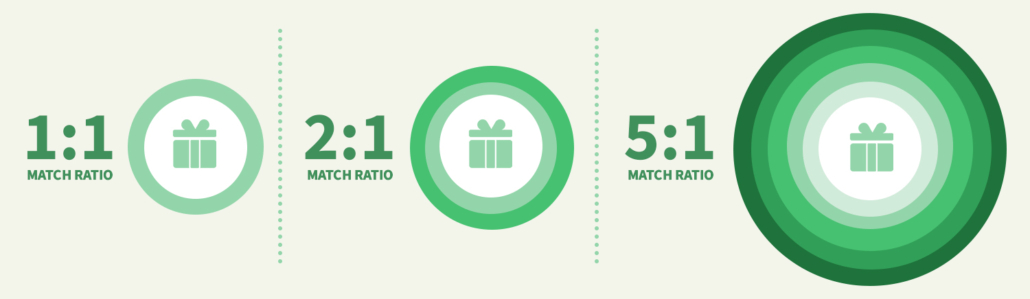
A matching gift ratio is the specific multiplier a company uses to determine how much it will donate for each employee’s gift. While a 1:1 ratio is the most common (meaning the company matches an employee’s donation dollar for dollar), many corporations go much further.

In this case, a 2:1 ratio effectively triples employee donations (i.e., a $100 gift results in a $200 match, totaling $300 in value), while a 3:1 ratio quadruples the donation amount ($100 donation → $300 match → $400 value).

According to Double the Donation’s matching gift statistics:

  • 91% of companies match at a 1:1 ratio
  • 4% match at a lower rate, such as .5:1
  • 5% of companies match at a higher rate, like 2:1 or 3:1

What are Matching Gift Ratios

By understanding the math behind these ratios, your development team can better communicate the accurate value of workplace giving involvement. And when you uncover these opportunities, you’ll see that even a small increase in ratio can have a massive impact on your year-end totals.

Companies With Year-Round High-Ratio Matching Gift Programs

Many companies maintain a high match ratio (i.e., 2:1 or 3:1), tripling or quadrupling employee donations throughout the year. These programs are gold mines for nonprofits because they provide a consistent stream of amplified revenue.

By identifying donors who work for companies with these generous multipliers, you can focus your stewardship on the supporters with the highest potential impact.

Company Name Match Ratio Maximum COMPANY CONTRIBUTION
Coca-Cola 2:1 $20,000
Johnson & Johnson 2:1 $40,000
Soros Fund Management 2:1 $300,000
W.W. Grainger 3:1 $7,500
American International Group 2:1 $20,000
Gates Foundation 3:1 $30,000
Capital Group 2:1 $5,000
Ford Foundation 3:1 $30,000
Pew Charitable Trusts 2:1 $20,000
W.K. Kellogg Foundation 2:1 $100,000
David and Lucile Packard Foundation 3:1 $30,000
Charles Stewart Mott Foundation 3:1 $12,000
Annie E. Casey Foundation 2:1 $6,000
Joyce Foundation 2:1 $3,000
Robert Wood Johnson Foundation 5:1 $50,000

Coca-Cola (2:1 match ratio)

The Coca-Cola Company is well-known for its generous community-based philanthropy. They offer a 2:1 match ratio for employee donations, meaning they triple the employee’s gift. This program is available for up to $10,000 per employee annually, making it a highly accessible source of high-ratio funding.

Learn more about Coca-Cola’s matching gift program →

Johnson & Johnson (2:1 match ratio)

Johnson & Johnson provides a very generous 2:1 match for current employees. However, the company also extends its matching program to retirees at a 1:1 ratio. This program features a $20,000 annual cap per employee.

Learn more about Johnson & Johnson’s matching gift program →

Soros Fund Management (3:1 match ratio)

This investment firm offers a 3:1 match for its employees, with a staggering maximum annual corporate contribution of $300,000. (Note: High-finance firms often have high maximum match limits, which can result in five-figure checks for your organization!)

Learn more about Soros Fund Management’s matching gift program →

W.W. Grainger (3:1 match ratio)

W.W. Grainger stands out with a very generous 3:1 match ratio. For every $1 an employee gives, the company contributes $3, effectively quadrupling the impact of initial donations from many team members. Grainger employees can contribute up to $2,500, and the company will match their gifts with up to $7,500 in company funds.

Learn more about W.W. Grainger’s matching gift program →

American International Group (2:1 match ratio)

American International Group, or AIG, matches employee donations at a 2:1 ratio. The company has a long history of supporting community-based organizations and educational institutions, providing a substantial boost of up to $10,000 per employee each year.

Learn more about American International Group’s matching gift program →

Gates Foundation (3:1 match ratio)

The Gates Foundation (formerly the Bill & Melinda Gates Foundation) is an industry leader in giving. They offer a 3:1 match for their employees with an annual contribution cap of $30,000. Given the foundation’s focus on global health and education, it is a primary target for nonprofits working in those areas.

Learn more about the Gates Foundation’s matching gift program →

Capital Group (2:1 match ratio)

Capital Group offers a 2:1 match for donations made by both full-time and part-time employees. They provide an annual maximum match of $5,000 per employee, which is significant support for local nonprofits.

Learn more about the Capital Group’s matching gift program →

Ford Foundation (3:1 match ratio)

As one of the wealthiest foundations in the world, the Ford Foundation provides a 3:1 match for its staff. This reflects their deep commitment to social justice and offers up to $30,000 in matching funds per year.

Learn more about the Ford Foundation’s matching gift program →

Pew Charitable Trusts (2:1 match ratio)

The Pew Charitable Trusts match employee donations at a 2:1 ratio. They support a wide variety of causes, with a generous annual match cap of $20,000 per team member.

Learn more about Pew Charitable Trusts’ matching gift program →

W.K. Kellogg Foundation (2:1 match ratio)

The Kellogg Foundation matches employee gifts 2:1. The organization is particularly focused on funding causes that support children and families, providing up to $100,000 in annual matching gifts.

Learn more about the W.K. Kellogg Foundation’s matching gift program →

David and Lucile Packard Foundation (3:1 match ratio)

The Packard Foundation offers a 3:1 match, making it one of the most generous foundation-based employee matching gift programs available, with an annual maximum of $30,000 per individual.

Learn more about the David and Lucile Packard Foundation’s matching gift program →

Charles Stewart Mott Foundation (3:1 match ratio)

The Mott Foundation is another leader with a 3:1 ratio. This team emphasizes education and environmental sustainability with an annual match limit of $12,000 per employee.

Learn more about Charles Stewart Mott Foundation’s matching gift program →

Annie E. Casey Foundation (2:1 match ratio)

This foundation matches employee gifts at a 2:1 ratio, providing up to $6,000 per year in support to nonprofits focused on child welfare, poverty alleviation, and beyond.

Learn more about Annie E. Casey Foundation’s matching gift program →

Joyce Foundation (2:1 match ratio)

The Joyce Foundation matches employee donations at a 2:1 ratio, with a focus on causes in the Great Lakes region and on social policy issues, and with a maximum annual match of $3,000.

Learn more about the Joyce Foundation’s matching gift program →

Robert Wood Johnson Foundation (5:1 match ratio)

The Robert Wood Johnson Foundation is a rare organization that offers a standout 5:1 match, with an incredible annual maximum of $50,000 per employee. This foundation boasts the highest matching gift ratio to date!

Learn more about the Robert Wood Johnson Foundation’s matching gift program →

Quick Tip:

When communicating with donors at companies like these, don’t just ask them to check if they have a match. Specifically mention that their company is known for “tripling” or “quadrupling” employees’ impact. This specific language creates increased urgency and excitement around the match opportunity.

Companies with High-Ratio Matching Gifts in Special Circumstances

Not every company offers a high ratio every day of the year. Some corporations use high-ratio matches to incentivize specific behaviors, such as supporting mission-aligned causes or serving on a nonprofit’s board. Others increase their ratios during high-traffic fundraising periods, including Giving Tuesday or other company-wide initiatives.

Check out a few examples of companies that offer 2:1 or 3:1 match ratios when employee gifts meet specific conditions!

Company Name Special Ratio Circumstances REQUIRED TO UNLOCK ELEVATED Match
Avon 2:1 Applies to the first $500 donated; subsequent funds are matched at 1:1 up to $15,000.
General Mills 2:1 Reserved for organizations focused on food sustainability.
American Express 2:1 Applies to the first $1,000 when the employee serves on a board or volunteers 50+ hours.
FM Global 2:1 High-ratio matching is limited to donations to educational institutions.
Caterpillar 2:1 Offered as a special promotional match ratio during Giving Tuesday.
PNC Financial Up to 4:1 The match ratio is determined by the employee’s specific title and level within the company.
Nike 2:1 For sport-related causes or organizations supporting the Black Community Commitment.
Blue Shield of California 2:1 Available during specific quarterly campaigns or for employees in leadership roles.
Murphy Oil Corporation 2:1 High-ratio matching is available only for donations to educational institutions.
The Standard 2:1 Applicable for donations made through the company’s designated online giving portal.
Adobe 2:1 Promotional ratio offered during specific time periods, like Giving Tuesday.
John Wiley & Sons 3:1 Applies to the first $500 of an employee’s contribution.

Avon

Avon offers a 2:1 match for the first $500 an employee donates. After the initial amount, the ratio drops to 1:1, up to a maximum match of $15,000 per year.

Learn more about Avon’s matching gift program →

General Mills

General Mills provides a 2:1 match specifically for organizations focused on food sustainability, up to $1,000 each year.

Learn more about General Mills’ matching gift program →

American Express

American Express uses a 2:1 ratio to reward deep engagement. The first $1,000 of an employee’s donations are matched 2:1 if that employee serves on a nonprofit board or volunteers more than 50 hours in a year. The company provides a total maximum match of $8,000 per employee.

Learn more about American Express’s matching gift program →

FM Global

FM Global offers a 2:1 match specifically to educational institutions. Up to $10,000 in matching funds is available annually for these donors, making them priority prospects for schools and universities.

Learn more about FM Global’s matching gift program →

Caterpillar

Caterpillar is known for its special Giving Tuesday promotions. In the past, the company has offered 2:1 matches on this global day of giving, with an annual maximum of $2,000, creating a strong incentive for their employees to donate.

Learn more about Caterpillar’s matching gift program →

PNC Financial

PNC Financial can offer up to a 4:1 match, though the exact ratio is based on an employee’s title or position. With a maximum match of $2,500, these high-multiplier gifts are often reserved for leadership roles.

Learn more about PNC Financial’s matching gift program →

Nike

Nike offers a 2:1 match for sport-related organizations and those supporting the Black Community Commitment. This program allows for a maximum match of $10,000 per year, aligning corporate giving with brand advocacy.

Learn more about Nike’s matching gift program →

Blue Shield of California

Blue Shield of California runs quarterly employee giving campaigns through which donations are matched at a 2:1 rate. The company offers an annual maximum match of $2,500, and timing your appeals to eligible employees within these specific windows can lead to significant spikes in both revenue and engagement.

Learn more about Blue Shield of California’s matching gift program →

Murphy Oil Corporation

Murphy Oil Corporation also offers a 2:1 match specifically for educational institutions. The company provides a generous maximum match of $12,500 per year for eligible schools.

Learn more about Murphy Oil Corporation’s matching gift program →

The Standard

The Standard provides a 2:1 match for donations made through the company’s online giving portal, Benevity. Full-time, part-time, and retired employees can have their gifts matched up to $5,000 on an annual basis.

Learn more about The Standard’s matching gift program →

Adobe

Adobe has been known to increase its match to 2:1 during specific time periods, including Giving Tuesday. The company’s matching program provides up to $10,000 in matching funds per employee each year.

Learn more about Adobe’s matching gift program →

John Wiley & Sons

John Wiley & Sons offers a 3:1 match on the first $500 an employee gives. This program has an annual maximum match of $5,000, providing an excellent incentive for early-year contributions.

Learn more about John Wiley & Sons’ matching gift program →

Identifying High-Ratio Opportunities with Fundraising Software

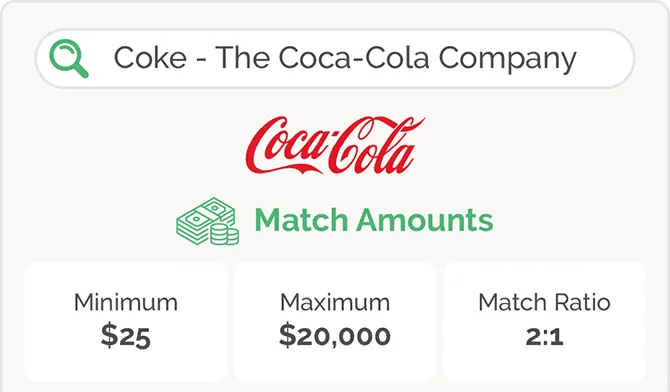
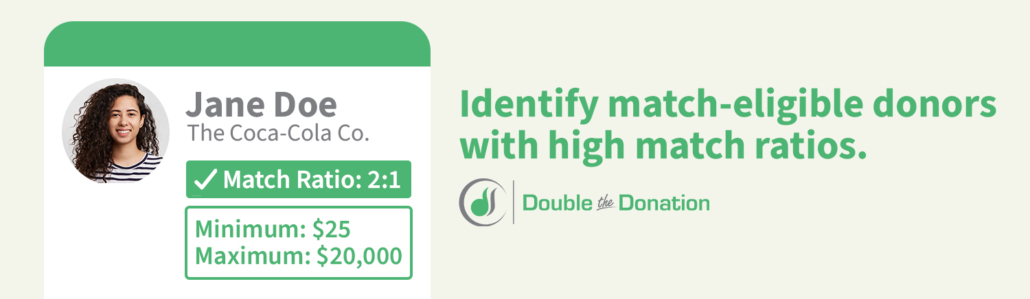
Manually searching for each donor’s employer, not to mention its specific matching gift ratio, is impossible for most fundraising teams. This is where the right software becomes indispensable. A high-quality database tool can automate the process by identifying match-eligible donors as they give and providing them with the exact forms, guidelines, and instructions they need to submit a request post-transaction.

An example of a matching gift database showcasing Coca-Cola's high-ratio matching gift program

By integrating these tools into your existing tech stack, you ensure that your nonprofit is always prepared to capitalize on high-ratio opportunities. You no longer have to wait for a donor to mention where they work; the software does all the heavy lifting for you.

Did you know? matching gift automation tool like Double the Donation can increase matching gift revenue for nonprofits by more than 20% to 50%. Just think of the extra mission work you can accomplish with those extra funds!


Fundraising Software

Wrapping Up: Do Your Donors Work for These Generous Employers?

High-ratio matching gifts represent one of the greatest “hidden” opportunities in the world of fundraising. By focusing your outreach on donors who work for these generous employers, you can significantly increase your impact with minimal extra effort.

Plus, as we look to the future of corporate gift matching, many companies continue to expand and grow their matching gift initiatives. That means we can expect more and more employers to offer increasingly generous matching gift ratios!

Just remember that the key to success lies in donor awareness. Most supporters want to help your cause as much as possible, but they often don’t know that their employer is willing to triple or quadruple their contribution. Using a robust fundraising tool to identify and educate your audience is the best way to ensure your organization thrives.

Do you know if your donors work for these high-ratio matching gift companies? Use a comprehensive matching gift database like Double the Donation to find out!