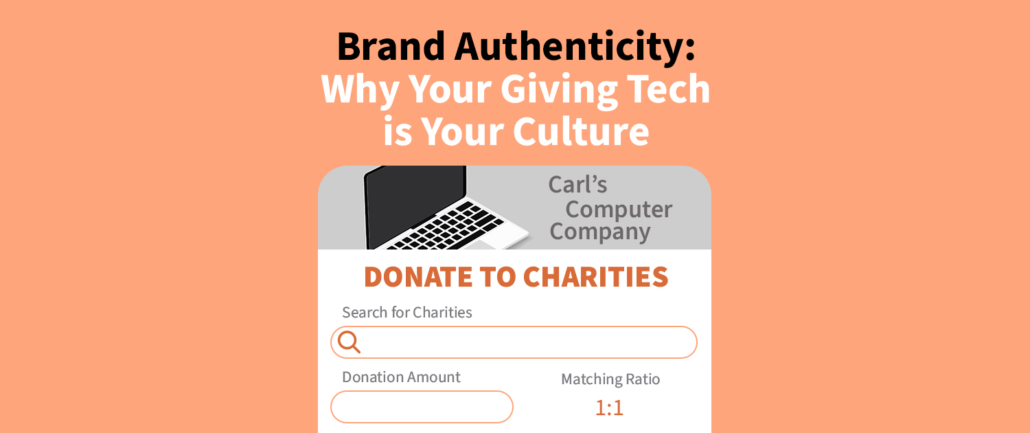
Brand Authenticity: Why Your Company’s Giving Tech is Your Culture
In the modern corporate landscape, a company’s brand is no longer just what it tells the world through marketing campaigns. It is the sum of every interaction an employee has with the organization’s internal systems.
This is particularly true for social impact initiatives. When a corporation claims to be tech-forward and deeply committed to doing good, yet provides a clunky workplace giving system, a significant brand disconnect occurs.
In this guide, we’ll walk you through everything you need to know about:
- The rise of brand authenticity
- Why clunky systems undermine culture
- The new employee expectation
- How fundraising tools bridge the gap
- The value of modern CSR integrations
The lived experience of an employee participating in your corporate social responsibility programs can either erode trust or build pride. To protect your company’s brand, it’s important that you prioritize a smooth user journey that matches the efficiency of the apps your workforce uses every day.
Keep reading to find out how you can do so.
The Rise of Brand Authenticity in the Digital Workplace
Authenticity has become the most valuable currency in the modern workplace. Employees are no longer satisfied with high-level mission statements; they want to see those values reflected in the company’s daily operations. This shift is driven by a workforce that values transparency and consistency. When a company’s actions align with its words, it creates a powerful sense of belonging and purpose.
Corporate giving is one of the most visible expressions of a company’s values. It is a tangible way for an employer to say, “We care about the things you care about.” However, the medium is the message. If the technology used to facilitate that giving is outdated and frustrating, the message of caring is lost.
An authentic brand ensures that every touchpoint, especially those related to social impact, is designed with the user in mind.
In today’s world, brand authenticity is inextricably linked to digital fluency. Employees expect their work tools to be efficient. A company that forces a staff member to jump through hoops to double their impact through its matching gift program is essentially saying that the individual’s time is not worth a modern investment. True authenticity requires a commitment to removing these barriers and making the giving experience as seamless as possible.
Why Clunky Systems Undermine Corporate Culture
When an employee participates in a matching gift program, they take a proactive step to support a cause. This is a high-intent moment. If they encounter a clunky system that requires multiple logins or manual data entry, that intent can lead to frustration. This frustration does not just stay within the giving portal; it bleeds into the employee’s overall perception of the company.
A portal-locked system creates a siloed experience. It separates the act of giving from the act of being an employee. In a tech-forward culture, systems should work together. When a company’s internal platform is disconnected from the nonprofit’s donation form, it creates an unnecessary administrative burden that employees may interpret as a lack of true support from leadership.
Furthermore, these hurdles lead to low participation rates. When program participation is low, the corporate culture of giving feels weak. This can become a self-fulfilling prophecy where employees stop giving because they don’t see their peers doing so. To break this cycle, corporations need to move toward integrated solutions that facilitate an intuitive giving experience.
Frictionless Philanthropy and the New Employee Expectation
The expectations of the modern workforce have been shaped by the consumer world. Employees use apps that anticipate their needs and simplify their lives. They expect the same level of sophistication from their employers. Frictionless philanthropy is the idea that giving back should be as easy as any other digital transaction. It’s no longer an optional extra; it’s a requirement for attracting and retaining top talent.
For Gen Z and Millennial workers in particular, social impact is a major factor in career decisions. They want to work for companies that empower them to make a difference. However, they also tend to have a low tolerance for inefficient technology. If a company’s program feels like it belongs to 2005, it may signal that the company itself is stuck in the past. To these employees, friction is a sign of disrespect for their time and passions.
Frictionless philanthropy is achieved through deep integrations. When an employee can give to a nonprofit and have their match journey simplified through direct links and clear instructions, the technology itself fades into the background, and the impact takes center stage. This is the gold standard of the employee experience. It allows the individual to feel the full weight of their generosity without the impeding influence of the required paperwork.
How Nonprofit Fundraising Software Bridges the Culture Gap
Corporations can bridge the gap between their brand promises and their technology by encouraging the use of advanced fundraising software. For nonprofits, this technology acts as a data-synchronization layer that connects the donor’s intent with the corporation’s impact. By integrating these tools into the donation process, you provide a branded experience that reflects well on the corporation.
When an employee donates and immediately sees their company’s logo and matching gift policy, it reinforces their pride in their employer. A sophisticated fundraising tool makes the company’s philanthropy visible at the moment of the donation, which is far more impactful than a link in a monthly newsletter.
This technology also provides the “offline matching” capabilities that donors prefer. Because most employees want to give directly on a nonprofit’s website, having a fundraising software solution in place allows them to do so while still capturing the employment data necessary to trigger the match.
The Strategic Value of Modern Corporate Giving Integrations
For companies looking to scale their impact, the right integrations are essential. These software connections enable a two-way flow of data, ensuring that both the nonprofit and the corporation have accurate records of the impact being made. In a competitive talent market, brands that prioritize these seamless connections will succeed in building a more engaged workforce.
Modern social impact leaders understand that a program’s success is defined by its accessibility. When the matching process is intuitive, it reinforces the value of your employee benefits and positions your workforce to be the heroes of your brand story. This shift toward integrated CSR tech also provides a massive internal advantage: superior data.
When information flows automatically between a fundraising software tool and your internal systems, you eliminate the risks of manual entry and inconsistent reporting. This level of transparency is particularly vital for social impact reporting. Having a real-time view of where philanthropic dollars are going allows your team to demonstrate tangible impact to stakeholders with total confidence.
Wrapping Up & Next Steps
The definition of a successful corporate giving program is changing as the future of philanthropy continues to develop. Today, it’s no longer enough to simply offer a match; corporations must provide a giving experience that is worthy of their brand.
In other words, the technology used to facilitate philanthropy is a direct reflection of a company’s culture and its commitment to its employees. By investing in the right tools and supporting intuitive workflows, such as through corporate volunteerism and donation matching, you ensure that every act of generosity is handled with efficiency and respect.